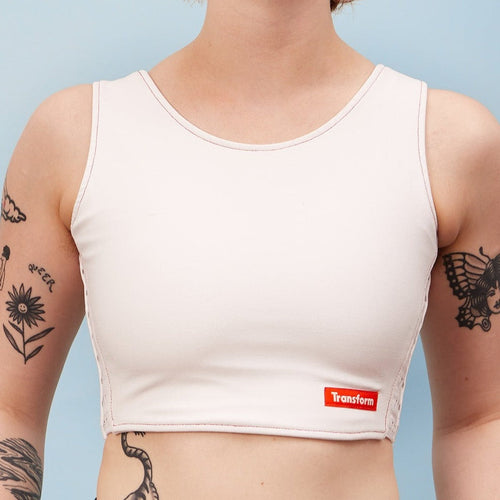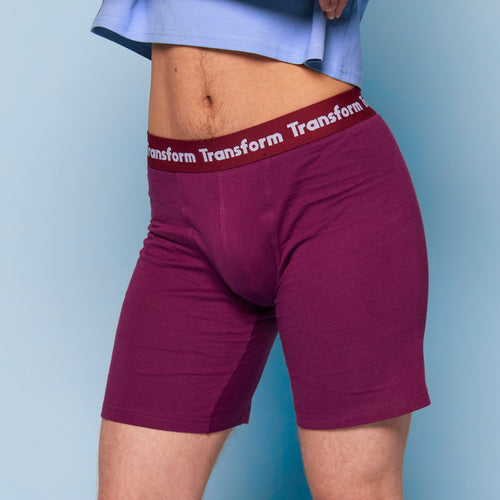

Some people never feel the need to examine or question the gender they were assigned at birth. But for many people, the gender they were assigned at birth doesn’t match how they feel on the inside. Gender dysphoria refers to that ‘misalignment’ between the gender a person feels or identifies as, and the one assigned to them at birth. So the goal of many ‘gender affirming’ products - such as packers or packing underwear, chest binders or tucking underwear - is to alleviate that gender dysphoria.
Not necessarily. Gender dysphoria is a recognised clinical experience, but not all trans or non-binary people experience it — and those who do experience it in very different ways and to different degrees. Some people feel intense distress about specific aspects of their body. Others experience a more diffuse sense of not quite fitting, or a persistent awareness that something is not aligned.
The absence of severe dysphoria does not make someone less trans. Gender identity is not defined by the presence or absence of distress — it is the internal sense of who you are.
Treatment for gender dysphoria is highly individual and depends on what the person needs. Options include social transition — using a different name, pronouns, and presentation — medical transition involving hormones, and surgical options. Psychological support is also a core part of care for many people.
In Australia, treatment is guided by the Australian Standards of Care and Treatment Guidelines for Trans and Gender Diverse Children and Adolescents, as well as adult care frameworks. Access to care varies by location — metropolitan areas generally have more specialist services than regional and rural areas.
Chest binding can be an important part of managing dysphoria for trans masc and non-binary people. Reducing the appearance of chest tissue can significantly reduce distress for people who experience dysphoria in that area of their body. If you are new to binding, our Complete Guide to Chest Binding covers everything you need to know to start safely.