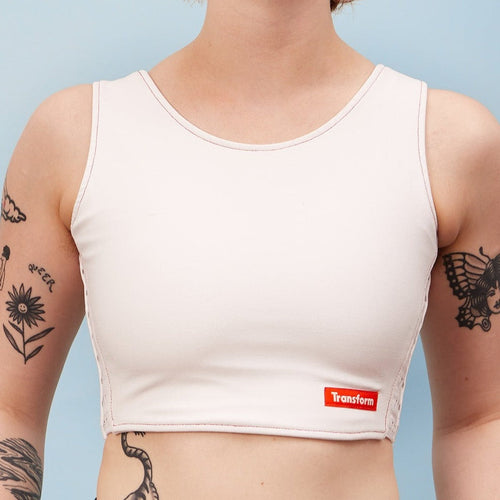

Chest binding is the practice of flattening the chest using a compression garment known as a chest binder. Many trans masculine people, non-binary people and others experiencing chest dysphoria choose to bind their chest to create a flatter appearance under clothing.
For some people, binding helps clothing fit more comfortably and align more closely with their gender expression. Others may bind only occasionally, depending on their activities or circumstances.
A chest binder works by compressing and redistributing chest tissue to create a smoother chest profile. Binders designed specifically for this purpose use structured stretch fabrics that provide firm compression while still allowing movement and breathability.
When used responsibly and in the correct size, binders can be worn comfortably as part of everyday clothing.
A chest binder is a garment designed to flatten the chest through compression.
Unlike sports bras or general compression garments, binders are constructed specifically to redistribute chest tissue in a way that produces a flatter appearance. They are usually made from strong stretch fabrics designed to balance compression with flexibility and comfort.
Chest binders are commonly worn by:
trans masculine people
non-binary people
people experiencing chest dysphoria
people seeking a flatter chest profile
You can explore our chest binder collection to see garments designed specifically for this purpose.
People bind for many different reasons.
For some individuals, binding helps reduce chest dysphoria and allows clothing to fit in a way that feels more comfortable. Others bind because they prefer a flatter chest profile in certain social or professional settings.
Some people bind regularly as part of their daily clothing choices. Others bind only occasionally depending on their activities or environment.
Everyone’s experience with binding is different, and there is no single “correct” approach. The most important factor is finding a way to bind that feels comfortable and sustainable for your body.
Over the past decade, researchers have begun studying chest binding in order to better understand both its benefits and potential health impacts.
One of the most widely cited studies is the Binding Health Project, a community-engaged survey involving more than 1,800 people with experience of chest binding. The study found that binding is very common and often provides significant psychological benefits, including relief from chest dysphoria and improved comfort in daily life.
At the same time, the research found that many people experience physical symptoms related to binding, particularly when binding frequently or for long periods.
Commonly reported symptoms included:
back or shoulder pain
shortness of breath
skin irritation
chest discomfort
posture changes
The study also found that binding frequency was associated with a higher likelihood of symptoms, meaning that people who bound more days per week were more likely to report physical discomfort.
Later reviews of the literature have reached similar conclusions: binding can produce physical symptoms, but many people continue binding because it significantly improves wellbeing, comfort and identity expression.
For this reason, most medical and community guidance focuses on risk-reduction strategies rather than discouraging binding altogether.
Because binders compress the chest, wearing them responsibly is important.
Commonly shared safety recommendations include:
wearing a binder for no more than around eight hours at a time
removing the binder before sleeping
taking regular breaks from binding where possible
ensuring the binder is the correct size
Research suggests that discomfort and physical symptoms are more likely when binders are worn for extended periods or when the garment is too tight.
Listening to your body and adjusting how long you bind can help support a more comfortable experience.
You can read more practical guidance in our article Tips for a Safe Bind.
Exercise while binding is a common question — and the answer depends significantly on how your binder is constructed.
Traditional binders use rigid internal panels to achieve compression. Those panels restrict your ribcage from expanding when you breathe, which is why the advice to avoid exercise in a binder became so widespread. That advice was written for rigid-panel binders — and it doesn't apply to Transform's designs.
Every Transform binder is made using layered compression fabric with no rigid internal panelling. This means your ribcage can still expand naturally during exercise, and the binder moves with your body rather than against it. Provided your binder fits well and feels comfortable during movement, exercise is possible — from gym sessions and running to team sports and yoga.
This is supported by recent research. A study by the Mental Health & Exercise Research Group (MHEX), in collaboration with researchers from the University of Western Australia, Curtin University, UNSW Sydney and Thriving in Motion, found that wearing a chest binder did not significantly affect lung function, upper-body strength, or aerobic capacity during maximal exercise. Participants performed just as well in their binder as without it.
As with all binding, comfort is your guide:
For a sport-by-sport guide to exercising in a chest binder, read Chest Binding for Exercise and Sport in Australia.
Choosing a binder that fits correctly is one of the most important steps for comfortable binding.
Different binders vary in compression level, fabric type and construction. Some designs provide firmer compression, while others prioritise flexibility and comfort.
When choosing a binder, consider:
the level of compression you prefer
the type of fabric used
how long you plan to wear the binder
your body measurements
Our article How to Choose a Chest Binder explains these factors in more detail.
Selecting the correct binder size begins with accurate measurements.
To determine your binder size, you will typically need two measurements.
Measure around the fullest part of your chest while keeping the measuring tape level around your body.
Measure around your rib cage directly underneath the chest.
Once you have both measurements, compare them with the sizing chart for the binder you are considering.
If your measurements fall between sizes, choosing the larger size may provide a more comfortable fit.
Our Chest Binder Size Guide provides step-by-step instructions for measuring and selecting the correct size.
A binder that is too tight may cause discomfort and may restrict breathing.
Signs that a binder may not fit correctly include:
pain or discomfort
difficulty breathing
skin irritation
excessive pressure on the chest or ribs
If you experience these symptoms, removing the binder and reassessing the fit may help.
Choosing the correct size is one of the most important factors for safe and comfortable binding.
Many people ask whether it is safe to swim while wearing a binder.
Most everyday binders are not designed for aquatic environments and may become heavier when wet.
Binders designed specifically for swimming use quick-dry fabrics and construction intended for water activities.
You can learn more in our article Can You Swim in a Binder, or explore our swim binder collection designed for water environments.
Looking after your binder properly can help extend its lifespan.
Most binders benefit from:
gentle washing
air drying
avoiding high heat
Our Chest Binder Care Guide explains how to keep your binder in good condition.
When practiced responsibly and with the correct size binder, many people bind their chest comfortably. Following common safety recommendations can help reduce risks.
Many commonly shared recommendations suggest limiting binder wear to around eight hours at a time and removing the binder before sleeping.
Yes — if your binder is designed without rigid internal panelling. Transform binders use layered compression fabric that allows your ribcage to expand naturally during exercise, which means they can be worn during physical activity. Ensure your binder fits correctly and feels comfortable before you start, and remove it if you experience any pain or difficulty breathing. Read our full guide to chest binding for exercise and sport.
A binder should feel snug and supportive but should not cause pain or restrict breathing.
Chest Binder Care Guide
Chest Binder Size Guide
Chest Binder Safety Guide
How Long Can You Wear a Chest Binder
Chest Binding for Exercise and Sport
What is Chest Binding?
How to Best Support Your Trans Child
What Does Trans Joy Mean to You?
Fashion and Identity
Chest Binding and Top Surgery
How to Get The Most Our of Your Chest Binder
Chest Binding at School and Work