




Lee moved to Melbourne to become a carpenter, but ended up building community as well.
Back in Canberra, their family’s gap in understanding had grown into a distance that well-meaning concern couldn’t bridge.
In Melbourne, a close friendship group let Lee explore their gender openly and at their own pace, laying the foundations of a more solid support structure. This gave Lee the actual leeway to figure themselves out and repair their familial relationships.
“Since moving to Melbourne everything's been way easier, but it's all been just such a huge whole journey” they say.
The first building blocks
“I was raised Christian,” Lee explains.
“So it was a whole [thing] – especially when I’d come out as a lesbian much younger, and that's already not been taken well – to then be fully aware that, like, there was also gender stuff on the table.”
“It took little baby steps [for me] to get more comfortable with [the possibility of being trans]. There was a bit of ‘Maybe this is something that I can leave in the back of my mind and not actually progress.’”
Lee’s negative experience coming out as queer meant that talking about being trans felt incredibly fraught, but they knew they had to tell their parents eventually.
“When I first tried to talk to them about it, it was, like, in the context [of] ‘I changed my name.’ And they were like, ‘Oh, don't transition though!’ … It took years after that to even have another conversation.”
“It's a part of my life that was really hard at the time. But now, it’s so much easier and... I don't know, I'm glad that I got through that period. I think a lot of people have that scariness in the first stages of accepting it with yourself, especially if you come from a background of people that aren't exactly the most approving of that kind of stuff.”
“They watched that Elliot Page interview, and I think they were like, ‘This sounds a lot like my child.’ [But] they don't care that Elliot Page is trans. They're not transphobic to anyone except me.”
It took a while, but Lee’s family slowly came around to the idea. Physical distance has allowed for more emotional closeness.
“It's been an awesome last couple [of] years because more honest conversations have been able to come up and like, they're able to actually understand how I feel. Do they mess it up every now and then? Absolutely. Do they talk about me in the past and say the wrong name? Absolutely. But, like, the fact [is] that they're actually trying, they are saying [Lee] now … It's just a slow process.”
Joining all the pieces
After this bumpy start, Lee initially experienced being trans as difficult, painful, and tiring for them and everyone else.
They’d been extremely gender non-conforming as a child – refusing to wear girls’ clothes, risking detention by turning up in their unisex sports uniform all school year, and being constantly confused why their body looked different than their brothers.
But after realising they weren’t actually female, their discomfort at being perceived as the wrong gender shot through the roof.
“When I first started realising the stuff about me and actually had the terminology, I think I focused a lot on the more negative stuff of being trans,” they say.
“Chest dysphoria [discomfort or distress about their chest], not wearing the clothes that you want to wear, having a lot of assumptions about your gender – I think I built my identity off that stuff a lot. Like, I was very reactive in how I presented myself or felt about trying stuff because of those negative impacts.”
But as Lee tentatively explored further, they discovered that doing more of the things that felt good was much more important than avoiding things that felt bad.
“As I got older, I don't know, you find what makes you actually feel good: community and connections that make you feel awesome. You start to build your identity on a lot more solid stuff.”
“That fear, it moves around and it changes, and you feel a little bit turbulent in your own identity.”
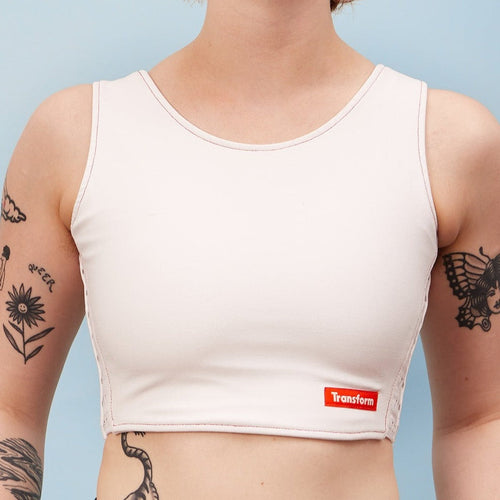
“But when you start to base [your identity] off positive experiences, you're like, ‘Chest binding feels great and I feel great in my clothes [when I wear a binder]. I go to the gym and I feel great about the body I have now.’ And, like, when you have connections with friends, you [can even] go to the beach and feel completely comfortable, not like you're like a snowman at the beach. And then you start to feel more of that joy.”
Connecting with other trans people also helped Lee deconstruct some rigid ideas about gender they didn’t realise they were holding, and rethink what it meant to transition.
“I was working in a bar and there was this woman who used to come in all the time,” they explain.
“She was absolutely stealth – none of my other coworkers knew that she was trans – but she used to come in and smash this steak that was, like, this big [miming a very large steak], and she'd drink, like, 5 beers. And every time they saw it, they were like, ‘I've never seen a woman do this in my life. She's incredible.’ And I asked her about it one day and she was just like, ‘Yeah, I transitioned. I feel great about it. I like steak and beers. So I'll be damned if anyone's gonna stop me from eating steak and beers.’ [After that] I was like, I will be painting my nails actually.”
Building a new life
Finding queer friends meant Lee could finally take the pressure off and thrive in situations they used to dread.
“There's a lot of energy that you're constantly expending that you don't realise. Whether it's thinking about your own stuff, or it's, like, just the physical process of explaining yourself to others, all of that stuff is just, like, it's exhausting. When you're hanging out constantly with people who aren’t queer, you don't realise it, but you are taking on a huge weight.”
“The second that you feel comfortable [around friends] or have allies, you feel like that weight has been lifted off you. Like, I didn't realise I was actually carrying so much with me everywhere I went. I didn't realise how hard it was.”
They even learnt that it was ok to come level with people about their transition – and that it could actually make their relationships better.
“Every now and then you'd run into someone … who'd be fully supporting and like, ‘Yeah, okay. I'll switch up your name and your pronouns. No worries.” As long as you were upfront with them and actually had the conversation, they were quite happy [to make the change]. And that was shocking.”
“I remember one of my mates, a tradie, just a very ocker man, and when I wasn't telling him stuff and sneakily changed my name on [social media] and told my partner to tell him instead of having a direct conversation, he was really confrontational about it. The second I actually said, ‘Hey, man, this is why this is important to me’ he was so receptive. It was crazy. He just wanted that actual, honest chat.”
Now, Lee and their friends build each other up by celebrating the moments when things click into place.
“This is why having community is good, because they know about those little things, and they do go ‘You getting a little moustache? That looks cute. Those workouts are really working for you!’ That sort of thing. They know about the little things, the little wins.”
“Do your best to find it, is what I would say, because it makes your whole experience so much better.”


