
Chest binding is safe for most people when done with a well-fitted, purpose-made binder, for reasonable periods, with regular breaks — and a small but growing body of research now backs this up, including preliminary evidence that binders like ours don't meaningfully restrict breathing or fitness during exercise. The risks that do exist come almost entirely from unsafe practices: using tape or bandages instead of a proper binder, wearing a binder that's too small, binding for too many hours, or ignoring pain and breathing difficulty. This page brings together what the current research actually shows, what it doesn't yet tell us, and how that translates into our safe-binding guidance.
For a long time, standard advice was cautious by default: avoid exercising in a binder, because rigid-panel binders genuinely can restrict how your ribcage expands when you breathe hard. That caution made sense for the binders it was written about at the time.
A study by the Mental Health & Exercise Research Group (MHEX) — a collaboration between the University of Western Australia, Curtin University, UNSW Sydney, the Kids Research Institute, and Thriving in Motion — tested exercise performance with and without a chest binder. The study found no significant difference in aerobic fitness, muscle strength, or lung function between the two conditions.
A smaller, earlier pilot study of teenagers found similarly reassuring results — binding didn't appear to reduce exercise capacity in that group either.
This is genuinely encouraging — but it's a first step, not a final word. See "What We Still Don't Know" below.
In August 2026, our founder Simone was interviewed by ABC News as part of their coverage of this research. The piece also spoke with Dr Adam Brownhill, medical director of a Melbourne gender-affirming care clinic, about the importance of proper fit and the risks of DIY binding methods like tape — guidance that lines up directly with what we tell every customer who comes through our door. AFLW player and Transform ambassador Tilly Lucas-Rodd was also featured, speaking to their own experience with binding and top surgery.
We were talking to our customers about the limits of the old advice well before this research existed — telling people not to exercise or sleep in a binder, based on the best information available at the time. Research like this is exactly why that guidance evolves. We stay closely engaged with emerging evidence so what we tell you reflects the current state of knowledge, not just what used to be assumed.
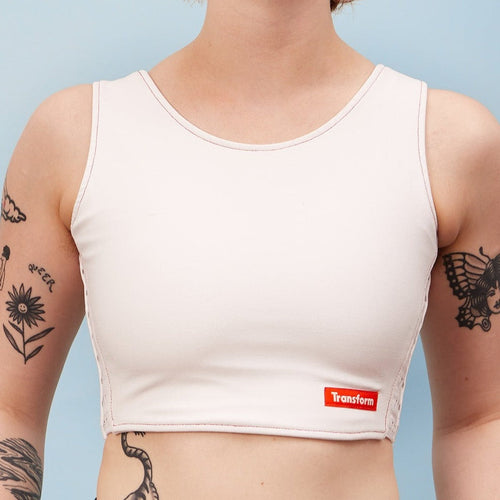
Most of the caution in older binding advice is about rigid internal panelling — a stiff structural layer that holds compression in place but also resists the natural movement of your ribcage. All Transform binders are built without it. We use premium, layered compression fabric instead, which achieves an effective, flat result while still allowing your chest wall to expand and your body to move — bending, reaching, twisting, and breathing hard during exercise included.
Research aside, safe binding practice hasn't changed at its core — it's built on the same fundamentals we've refined across over 1000 one-on-one chest binder fittings:
For the full detail on any of these, see our Tips for a Safe Bind guide and Complete Guide to Chest Binding.
We think it matters to be upfront about the limits of this research, not just the encouraging parts:
We'd rather tell you honestly where the evidence currently stands than round it up into a bigger claim than it supports. As more research comes out — including any longer-term follow-up from the MHEX team — we'll update this page.
For most people, yes — when using a well-fitted, purpose-made binder, worn for reasonable periods with regular breaks. The real risks come from unsafe practices like using tape, wearing a binder that's too small, or ignoring pain and breathing difficulty, not from binding itself.
With a panel-free binder like Transform's, yes for most people, provided it fits comfortably and you remove it if you experience pain, dizziness, or difficulty breathing. Preliminary research supports this for short-term exercise performance, though longer-term data is still developing. See our full exercise and sport guide.
Yes — most recently a study by the Mental Health & Exercise Research Group (MHEX), involving the University of Western Australia, Curtin University, UNSW Sydney, the Kids Research Institute and Thriving in Motion, which found no significant difference in aerobic fitness, strength, or lung function when exercising with a binder versus without. The research is preliminary and short-term; more studies are underway.
Using tape or bandages instead of a proper binder. These give you no control over compression level, and people using them often bind tighter than is safe — which can cause real injury, including restricted breathing and rib damage.
If you have a health condition affecting your breathing, chest, spine, or heart — such as asthma, scoliosis, or a cardiac condition — yes, speak with a healthcare provider first. Otherwise, most people can bind safely by following standard safe-binding guidance and choosing a well-fitted, purpose-made binder.
Not sure where to start, or want a hand choosing the right binder for your body? Book a free fitting at our Melbourne store, or get in touch — we're always happy to help.