


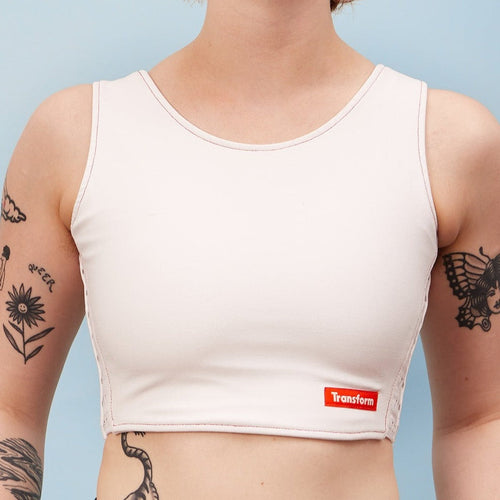





Understanding Chest Binder Fit
Choosing a chest binder that fits correctly is one of the most important steps for comfortable binding. A well-fitting binder can create a flatter chest profile while still allowing you to breathe and move comfortably.
Binders that are too tight may cause discomfort or restrict breathing, while binders that are too loose may not provide the level of compression you expect.
Understanding how binder sizing works can help you choose a garment that fits your body properly.
If you’re new to binding, our Complete Guide to Chest Binding explains how binders work, safety considerations and how to find the right size.
Measuring for a Chest Binder
The first step in choosing a binder is taking accurate measurements.
Most binder sizing charts use two measurements to determine the correct size.
Chest measurement
Measure around the fullest part of your chest while keeping the measuring tape level around your body.
Make sure the measuring tape sits comfortably against your body without pulling too tightly.
Rib cage measurement (under chest)
Measure around your rib cage directly underneath the chest.
Keeping the measuring tape level around your torso will help ensure an accurate measurement.
Once you have both measurements, compare them with the sizing chart provided for the binder you are considering.
Our Chest Binder Size Guide explains this process in more detail.
Understanding Binder Sizing
Binder sizes vary between brands, so it is important to compare your measurements with the sizing chart for the specific garment you are considering.
In many cases, sizing charts will prioritise the rib cage measurement because it determines how the binder fits around the torso.
If your measurements fall between two sizes, choosing the larger size may provide a more comfortable fit.
Selecting the correct size helps ensure that the binder provides compression without causing excessive pressure.
Choosing the Right Binder Style
Chest binders are available in several different styles and designs.
Some binders are designed for firm compression and a flatter chest profile, while others prioritise flexibility and comfort.
When choosing a binder, consider:
-
how long you expect to wear the binder
-
the level of compression you prefer
-
the type of fabric used
-
how the garment fits your body shape
Some people prefer a binder designed for everyday wear, while others may choose different styles depending on their activities.
Comfort and Breathability
Comfort is an important factor when choosing a binder.
Binders are designed to compress the chest, but they should still allow comfortable breathing and movement. Fabrics that provide stretch and breathability may help improve comfort during longer wear periods.
Taking time to find a binder that fits your body well can make a significant difference to your overall experience with binding.
Signs a Binder May Not Fit Correctly
If a binder does not fit properly, it may cause discomfort.
Possible signs that a binder may be too tight include:
-
difficulty breathing
-
chest or rib pain
-
skin irritation
-
excessive pressure on the torso
If you experience these symptoms, removing the binder and reassessing the size may help.
Choosing the correct size is one of the most important steps for safe and comfortable binding.
Choosing a Binder Designed for Chest Binding
Using garments designed specifically for chest binding is important. Improvised compression methods such as bandages or tape can place uneven pressure on the chest and may increase the likelihood of discomfort, or even permanent physical damage.
Binders designed for chest binding are constructed to distribute compression more evenly across the torso.
You can explore our chest binder collection to see garments designed specifically for this purpose.
Chest Binder Fit FAQ
How do I know what size chest binder to buy?
Measure around the fullest part of your chest and around your rib cage underneath the chest. Compare these measurements with the sizing chart for the binder you are considering.
What should a chest binder feel like?
A binder should feel snug and supportive but should not cause pain or restrict breathing.
Should I size up if I am between binder sizes?
If your measurements fall between sizes, choosing the larger size may provide a more comfortable fit.
Can I wear a sports bra instead of a binder?
Sports bras may provide some compression but are not designed specifically to redistribute chest tissue in the same way as a binder.
Related Reading
Complete Guide to Chest Binding
Best Chest Binder Guide
Chest Binder Size Guide
Chest Binder Safety Guide
Chest Binder Care Guide
How Long Can You Wear a Chest Binder?


